

Buying used golf clubs is a good option for any golfers who are on a budget. It is also wise to look in the second hand market if you are very much a casual golfer who doesn’t play the game that much. Searching for used golf clubs is also a very smart move if you are completely new to the game. You might be fully into it right now and highly engaged because it is something new – but are you certain yet how well you will play? Are you totally convinced that you will stick with it?
The Complete Guide to Buying Second Hand Golf Clubs
If there are any doubts, forking out on brand new and very expensive golf clubs isn’t really that sensible.
Finally, you might be an experienced golfer who has their heart set on a new piece of golfing equipment. If this is the case, and you have an eye for a bargain, searching the listings of second hand golf clubs is a great option.
Essentially, whatever your individual circumstances or personal reasons are for considering the option of used golf clubs, you are now in absolutely the right place.
Choosing second hand golf clubs certainly isn’t simple. In fact, it can be very confusing at times – especially if you are a golfing novice. There is just so much choice!
This is why this Buyer’s Guide has been designed with you in mind. Its aim is clear – to provide you with a complete guide to buying used golf clubs.

Do your homework first
As with any purchase, brand new or second hand, a successful purchase often depends on the buyer doing a fair bit of homework and research before taking the plunge into the market.
Golf clubs and golfing equipment are no exception. Before you buy a set of clubs (or individual clubs), it makes good sense to research your options very carefully and thoroughly. There are many ways to do this. Firstly, of course, reading this Buyer’s Guide is a great place to start. Secondly, asking those in the know and those with more experience of the game will always be a great source of insight and advice.
Beginners, especially, will pick up some great tips and nuggets of information by asking club pros and more experienced golfers about sizes, shafts and styles of club. When you have identified clubs that you are interested in, check the second hand price against the recommendedretail price. Be mindful that due to brands discounting or discontinuing lines for new ranges, it is sometimes possible to pick up new sets rather than used sets, even in mint condition.
The Basics
It’s always a good start to begin with the basics. Firstly, let’s look at the different types of golf clubs out there. A driver is typically used when a shot of more than 175 yards away from the green. Irons come into play when the player is within 200 yards of the green. A putter is for use on the green. Wedges come in several shapes and sizes. The most common are pitching wedges, which are used to play the ball onto the green from the fairway, and a sand wedge which is used to play from the bunker.
Sets of clubs are available in various permutations. A standard set, typically, is made up of 3 woods, 8 irons (usually including a wedge) and a putter. Half sets are great options for beginners and usually include 2 woods, 4 irons (including a pitching wedge), and a putter.
To a degree, certain types of golf clubs can be chosen that will help a beginner get better at the game. For example, woods that have a larger club face tend to be a little bit more forgiving if your shots go astray. Similarly, irons with perimeter weighting are an excellent choice for beginners. Essentially, a perimeter weighted iron will allow the golfer to have a slower swing and be less accurate with their shots and still perform quite well and hit straight on the course. On a similar note, hybrid clubs are a good choice as they are easier to hit than some irons. Hybrids are metal woods with comparatively small faces.
Another key consideration is to ensure that the second hand clubs you buy are a good fit for you. Most people will be absolutely fine with shafts that are standard length. However, if you are very tall (6’ 6” or above) or very small (5ft or below), it is probably a good idea to opt for longer or shorter length shafts. Even a one inch difference will make your clubs much easier to handle and feel more comfortable.
Tips for buying second hand golf clubs
Deciding what you are looking for is an important first stage. Now, it’s time to look at specific things to look for when buying second hand.
Clubheads
Clubs that have been used extensively over a long period of time might develop a shiny spot in the centre of the clubface. If you notice such a spot then tread carefully. It will mean that the clubface won’t quite hold the ball. Any clubs that have indents in the face should be avoided too as this will affect the flight of the golf ball. Ultimately, when inspecting clubheads you are looking for the grooves in the face to have well-defined edges.
Shafts and Grips
You should check that graphite shafts do not have visibly worn areas and indentations. These, unfortunately, could be a tell-tale sign of weakness in the shaft – and could be at possible risk of breaking. You should also twist the grip and head in opposite directions. If it feels like there isn’t much resistance, it is another sign of weakness.
When checking steel shafts you should inspect it to check that it hasn’t been bent back into shape at all. You should also look for any cracks or worn areas in the grip. Re-gripping isn’t a massive expense, but it is an extra expense that you don’t really want to be having to pay for straightaway.
Try to demo the clubs
Of course, it might not always be practical but the best way to see whether a set of clubs is going to suit you or not is to give them a go.
Other things to consider
The likes oftitanium and carbon tend to show wear and tear and the effects of extensive play and aging more than clubs with steel heads. You should always check if the crown appears to have any dents.
Having looked at the basics and some general tips about what to look for when buying second hand golf clubs, let’s now look at some more detailed and specific steps to take that will help you get the most out of your purchase.
Modern golf clubs, like many other sports, have been absolutely revolutionised by technology and scientific developments. For example, strange as it may seem, the design of contemporary golf clubs has been influenced in recent years by the general principles of rocket design.
Here are some important things to think about in your search for second hand golf clubs.
Consider a short driver
As previously explained, if you are particularly tall or small, shorter or longer shafts are a very sensible option. However, in general, shorter shafts are good at helping you control your shots. It’s true, clubs with longer shafts tend to generate more speed, which helps to generate more distance in your shots. However, clubs with longer shafts are also more difficult to control.
Unfortunately, a trend has developed in the sport of golf for longer shafts. In fact, the shorter the club, the easier it becomes to hit a true and square shot.
Consider a hybrid
A recent rend on the part of golfing manufacturers to enable golfers to hit the ball a further distance has had an undesired knock-on effect – modern designs of some irons – particularly 3, 4 and 5 irons – can be difficult to hit for beginners or average golfers. The solution is to use a hybrid club instead. Make sure you match the iron you intend to replace with a hybrid carefully – the height should be the same.
Wider soles
Nothing to do with your feet, this type of sole is the bottom part of an iron. If the sole is wide it reduces the chances of the iron sticking in the ground.
A wider sole in a club also means that additional weight can be found in the sole. This extra weight creates a lower centre of gravity. This makes it easier to use and take good shots. You should pick a sole that measures the width of two fingers.
Don’t forget the importance of balls
There’s a science to a golf ball these days, in almost the same way as there is with a golf club. The golf ball is important and it means that you should invest in high quality golf balls if you are serious about improving your game. You can choose golf balls that are designed to give the golfer distance off the tee, or balls that give you more spin.
Of course, if you are an absolute beginner then there isn’t much point investing in high quality balls. At this stage, it is likely that you lose a fair number of balls when playing a round. It is only when your game has improved and you have reduced the number of lost balls that you should seriously think about investing in more expensive golf balls. But doing so will improve your game, so don’t forget the importance of golf balls!
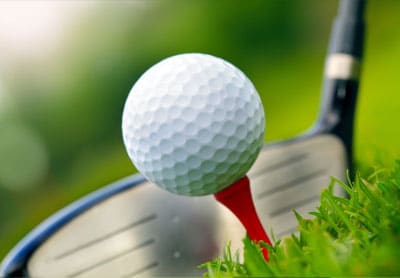
Always have your eye out for last year’s equipment
Technology is such an important part of the game these days that the leading golf manufacturers often update and tweak their products to incorporate the latest technological developments. This means that equipment that is only a year or two old becomes discounted.
The second hand market blossoms each year with some private sellers listing their nearly new equipment as well. There will always be some golf enthusiasts who feel that they have to have the very latest equipment as soon as it is released. This means they look to move on their existing golf clubs – which might only be a year old.
Keep your eyes peeled, there are definitely bargains to be found.
Choose the right shaft option
The shaft is an important consideration when buying second hand golf clubs. There are two distinct options when it comes to golf club shafts: steel or graphite.
Steel is the cheaper option and is generally more durable. It is also heavier than graphite. On the other hand, because of its comparative lightness, clubs which have graphite shafts are able to generate a faster swing speed. This results in a greater distance being achieved in shots. Of course, there will always be exceptions, but graphite is often considered to be the best option for senior players and women. Steel is considered best for younger players and males.
The question of whether to choose graphite or steel is not the only thing to consider when it comes to the shaft of golf clubs. The shaft flex is important too. It is vital, for the quality of your swing, that the shaft flex matches your swing. The flex is the ability of the shaft to adapt and bend as the club strikes the ball. If there isn’t a good match then the trajectory of your swing will suffer. As a result, you will not achieve maximum distance from your shots.
Size of club head
A golf beginner will often benefit from choosing club heads that are perimeter-weighted. Because a golf club has a larger head it offers more room for you to make contact with the ball. In essence, this gives you more of a sweet spot. The result should be that you gain more distance and greater accuracy.
As your golf shots become more accurate, you might find yourself opting for clubs with smaller heads. These are often more flexible and workable.
Choose your flex preference
A beginner might not have even heard about it, but the type of flex on the shaft of a golf club has a real effect on how easy a club feels to handle and have control over. People with a fast swing tend to prefer a stiff-flex shaft. Others might prefer a regular-flex shaft. You will generally recognise your preference quite quickly after giving the two types a go at a driving range.
Start with the essentials
Golfers are allowed to use up to 14 different clubs on a round of golf. However, if you are just starting out it is unlikely that you will find yourself wanting to use all 14. As a beginner, it is best to start with the essentials. A half set of clubs is a sensible first purchase. Another option is to choose the clubs that are the most forgiving on the course – the clubs that are perhaps the most ‘user friendly’. To this end, you might choose a driver, a fairway hybrid, a 6 and an 8 iron, a sand and a pitching wedge, and a putter.
It is also well worth considering choosing clubs that offer the maximum amount of loft. For drivers, this would be a minimum of 10 degrees. For fairway woods, you really want loft of at least 17 degrees.
The more loft you have, the easier it becomes to get the ball in the air. Loft also tends to reduce sidespin. All in all, clubs with maximum loft will help you to hit the ball straighter.
Choosing a Golf Bag
Once you have chosen your second hand golf clubs you also need to think about a golf bag to carry them around in. Modern golf club bags tend to be constructed from synthetic materials, such as PVC or nylon. There are several different types of golf bag. Remember, a golf bag isn’t just an essential for carrying your clubs around, it is also a necessity for transporting tees, balls, gloves and any other accessories that you want with you on a course.

Bags generally come in three categories. Stand bags (sometimes also called carry bags) are the most common. These are bags that are designed to be lightweight. Being easy to carry is a crucial factor, as these are bags that are chosen by golfers that prefer to walk around a golf course as they play. Built-in legs enable the golf bag to stand upright as you play a shot.
These type of bags are usually constructed from nylon blends to keep the weight down. The strap (or straps) are important design features on stand/carry bags. A double-strap bag is easier to carry in many respects as the weight is distributed across both shoulders. However, the design makes it awkward to access clubs while walking. For this reason, many people prefer single-strap bags. Either way, it is important that any strap is wide and comfortable.
Cart bags (or buggy bags) are golf bags that are designed to be carried on a golf cart/buggy. This type of bag tends to be heavier than a standard carry bag. Cart bags usually have additional pockets. You will see some versions that are designed to be carried or transported, but these are not as common.
Finally, staff bags are those that are used by professionals. These are designed to carry everything a golf pro needs, from 14 golf clubs to spare gloves and socks, and a whole host of accessories. Obviously, when fully loaded up these bags can be pretty weighty. This, of course, is why professionals employ the services of caddies!
When shopping for a used golf bag, you should check a few things. The condition of the zippers is obviously important. Check that they are in good working order and don’t catch or stick at all. The general condition of the material and the bag’s construction should be examined carefully. Sunlight might cause a bag to bleach over time. Similarly, prolonged and extensive exposure to sunlight will sometimes cause nylon to weaken and become brittle. The stitching and state of the seams should also be checked.
The style and condition of the shoulder straps should be given the once over. You need to check that the straps are in good condition and are still firmly attached with strong and secure stitching. Also, check that the straps are wide enough to be comfortable and that the padding is still in place and intact.
Finally, you should also check the pockets and establish whether they look strong, or appear to be weakened in any way. Check that stitching is intact and that all zips work, and that all the pockets close properly. Last but not least, ask yourself whether the bag has enough pockets for your needs.
Conclusion
Buying second hand golf clubs can save you a considerable amount of money. As previously mentioned, there are many good reasons, besides saving money, to look in the second hand market for used golf clubs. If you follow the guidance given in this Buyer's Guide you will be well on the way to finding the perfect second hand gold clubs for your particular needs.
As well as the guides contained on this website, you will find that brand websites and review sites are a goldmine of information. Researching, at the very least, will help you to narrow down your search from the start.
You will probably have a good idea of what you are looking for and what you need. Working out what your ‘red lines’ are before you really start searching for used golf clubs is an important first step to take.
Use this Buyer’s Guide as a checklist and reference guide. If you want more specific information about the different types of golf clubs or particular brands, just take look at the guides that can be found on the other pages of the site.
We wish you well in your search to find used golf clubs that are perfect for your needs. Good luck!